
Comprehensive Driving Lessons for All Experience Levels
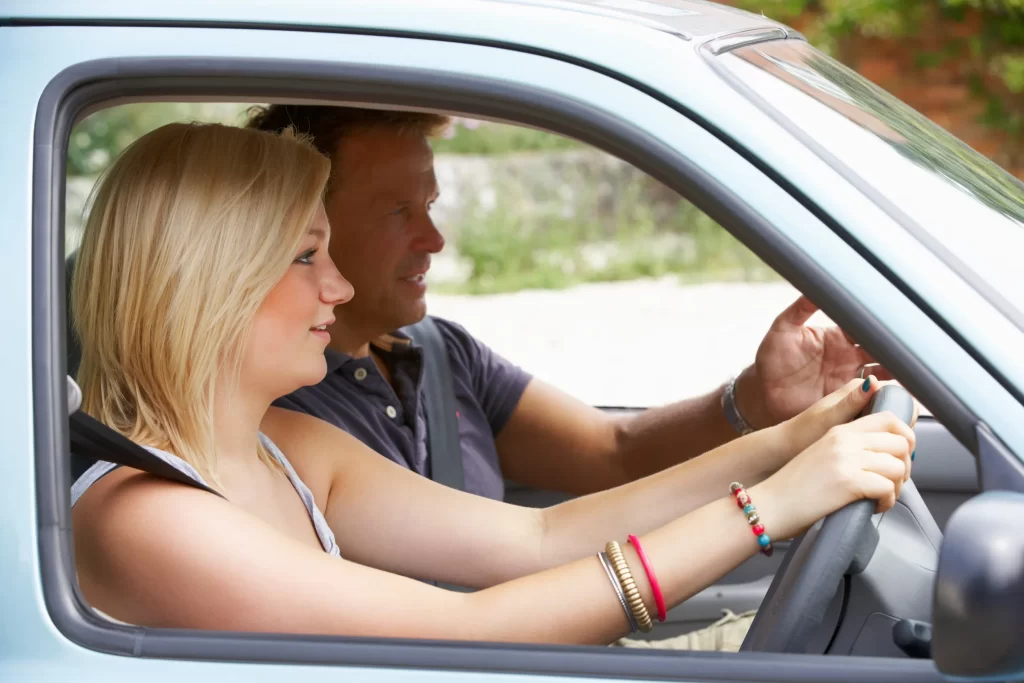
Learning to drive should be a positive experience, not a stressful one. JJ, our fully qualified DVSA-approved driving instructor, takes the time to understand how you learn best. Each lesson is planned carefully, focusing on both technical skills and safe driving habits. You’ll receive clear, step-by-step instruction in a calm environment that helps you stay relaxed and focused.
We work with learners of all kinds — from complete beginners and nervous drivers to those who just need a few refresher sessions before their test. Every student benefits from JJ’s experience, local knowledge, and calm guidance that makes each lesson productive and enjoyable.
CALM Driving Academy provides both manual and automatic driving lessons, allowing students to learn in the transmission type that suits them best. Whether you’re more comfortable with an automatic or want to master manual control, we’ll tailor your lessons to match your choice.
Our Services
Motorway Lessons
Our motorway driving lessons are ideal for new or recently qualified drivers who want to gain confidence when driving at higher speeds. You’ll learn how to safely join and leave motorways, maintain lane discipline, and manage overtaking with confidence. JJ also teaches effective observation, anticipation, and distance control — skills that are essential for safe long-distance driving.
Driving Lessons in and Around Cambridge
CALM Driving Academy provides lessons across Cambridge and the surrounding areas, giving you experience in a wide range of road types and traffic situations. From busy roundabouts and city streets to rural village lanes, our routes are carefully chosen to build your awareness and adaptability. By the time you’re ready for your test, you’ll feel confident handling real-world driving challenges.
Flexible Pick-Up and Drop-Off Service
We know flexibility matters, so we offer a convenient pick-up and drop-off service for all students. Whether you’d like to start from home, school, or work, we’ll make sure each lesson fits smoothly into your schedule.
ADI Instructor Training
If you’re interested in becoming a qualified driving instructor, CALM Driving Academy also offers ADI training for Part 2 and Part 3. JJ provides structured, one-to-one training designed to help you build the knowledge, skills, and confidence needed to qualify as an Approved Driving Instructor. Get in touch to learn more about ADI training opportunities in Cambridge.
Show me, Tell me Questionnaires
Tell me how you’d check that the brakes are working before starting a journey.
Brakes should not feel spongy or slack. Brakes should be tested as you set off. Vehicle should not pull to one side.
Tell me where you’d find the information for the recommended tyre pressures for this car and how tyre pressures should be checked.
Manufacturer’s guide, use a reliable pressure gauge, check and adjust pressures when tyres are cold, don’t forget spare tyre, remember to refit valve caps.
Tell me how you make sure your head restraint is correctly adjusted so it provides the best protection in the event of a crash.
The head restraint should be adjusted so the rigid part of the head restraint is at least as high as the eye or top of the ears, and as close to the back of the head as is comfortable. Note: Some restraints might not be adjustable.
Tell me how you’d check the tyres to ensure that they have sufficient tread depth and that their general condition is safe to use on the road.
No cuts and bulges, 1.6mm of tread depth across the central three-quarters of the breadth of the tyre, and around the entire outer circumference of the tyre.
Tell me how you’d check that the headlights and tail lights are working. You don’t need to exit the vehicle.
Explain you’d operate the switch (turn on ignition if necessary), then walk round vehicle (as this is a ‘tell me’ question, you don’t need to physically check the lights).
Tell me how you’d know if there was a problem with your anti-lock braking system.
Warning light should illuminate if there is a fault with the anti-lock braking system.
Tell me how you’d check the direction indicators are working. You don’t need to exit the vehicle.
Explain you’d operate the switch (turn on ignition if necessary), and then walk round vehicle (as this is a ‘tell me’ question, you don’t need to physically check the lights).
Tell me how you’d check the brake lights are working on this car.
Explain you’d operate the brake pedal, make use of reflections in windows or doors, or ask someone to help.
Tell me how you’d check the power-assisted steering is working before starting a journey.
If the steering becomes heavy, the system may not be working properly. Before starting a journey, 2 simple checks can be made.
Gentle pressure on the steering wheel, maintained while the engine is started, should result in a slight but noticeable movement as the system begins to operate. Alternatively turning the steering wheel just after moving off will give an immediate indication that the power assistance is functioning.
Tell me how you’d switch on the rear fog light(s) and explain when you’d use it/them. You don’t need to exit the vehicle.
Operate switch (turn on dipped headlights and ignition if necessary). Check warning light is on. Explain use.
Tell me how you switch your headlight from dipped to main beam and explain how you’d know the main beam is on.
Operate switch (with ignition or engine on if necessary), check with main beam warning light.
Open the bonnet and tell me how you’d check that the engine has sufficient oil.
Identify dipstick/oil level indicator, describe check of oil level against the minimum and maximum markers.
Open the bonnet and tell me how you’d check that the engine has sufficient engine coolant.
Identify high and low level markings on header tank where fitted or radiator filler cap, and describe how to top up to correct level.
Open the bonnet and tell me how you’d check that you have a safe level of hydraulic brake fluid.
Identify reservoir, check level against high and low markings.
You need to open the bonnet and tell the examiner how you’d do the check if you’re asked question 12, 13 or 14.
Local Areas We Cover
We’re proud to offer driving lessons across Cambridge and nearby villages, including:
- Cambridge
- Waterbeach
- Histon
- Milton
- Cottenham
- Hardwick
If your location isn’t mentioned, please get in touch — we’re happy to discuss flexible options to meet your needs.
Book Your Driving Lesson Today
Take the next step towards independence. Contact CALM Driving Academy today to book your lesson and enjoy a supportive, professional approach that helps you become a safe, confident driver for life.
Contact Us